Friday, 29 July 2011

Memories Of Byker And The Lessons To Learn

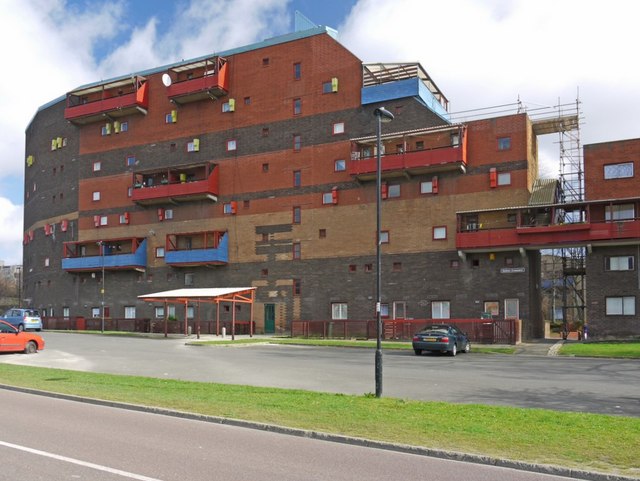
The iconic Byker Wall (source)
I had many things going on in my head when I read the news that the Byker Estate in Newcastle is finally to be transferred from local authority control into local ownership, after local residents voted for the transfer to the Byker Community Trust. At one level it's just another stock transfer, but there are three things about it that really stand out for me.

The first is that I have happy memories of the estate. My sister was a landscape architect working on Byker with Ralph Erskine in the 1970s when the estate was redesigned and the synonymous wall was built. She lived on the estate as part of her work, and I went there a few times, often with my then girlfriend, of whom I also have happy memories, but those are for another time and place...

As an A-level geography student I remember being curious about - and then inspired by - the community-centric way in which Erskine and his team went about the design and redevelopment. I sat in community meetings, heard first-hand the debates about the design, the phasing and the costs. Over a period of a couple of years, I saw proud residents moving into new homes in a fresh community they had helped create.

I'm sure that the process had its moments, but it seemed to me to be a real partnership between the professionals and local people, both sharing the same objective and recognising the unique strengths that each partner brought to the table. Who knows, perhaps those days set the seed for the career choices I subsequently made and my continuing belief that strong partnerships between professionals and communities are vital, but oh so hard to get right.

The second memory is less sweet and that is of Byker's dream turning sour in the 1980s. As with other projects of its time (eg James Stirling's famous Southgate Estate in Runcorn) innovation in design and development proved not to be enough. Those new communities - whether in the New Towns that Southgate was part of, or in inner cities like Byker - needed innovative management as well. It’s a real lesson for innovators, who are notoriously less good at follow-through, that they must leave equally robust and innovative management arrangements if their exciting concepts and designs are to last beyond a generation.

This point really came home to me as I was in Urbis a few year's ago, looking at a Will Alsop concept of high-speed maglev trains flitting between giant living pods in Hull and Liverpool on elevated monorails, making a night out in either only a 15 minute train ride away - just imagine if National Express Trains had won that franchise! And there is relevance of this lesson for social housing today, where management regimes for tower blocks, walk-up flats and even sheltered schemes may have changed only slightly over 30 years, the nature of the residents and their expectations has changed dramatically.

The third thing is that Grant Shapps has claimed that the Byker transfer is a success for the Big Society. The solution proposed for Byker's endemic problems was demolition, yet residents opposed this. Shapps has applauded the efforts of tenants who "never took no for an answer", who campaigned for control of their neighbourhood and who have finally won that campaign getting government debt of over £40 million written off in the process. It’s a stock transfer, but "not as we know it Jim"; it's much smaller than most, in a tight geography; with training and job creation for local people as the means to delivering the much-needed improved homes. And won't that help stabilise the Community Trust's rental income? But Shapps is younger than me, so he certainly doesn’t remember, and may not even know, that the 1970's Byker was also an example of Big Society in action. What goes around, comes around...

Friday, 22 July 2011

What Would Jamie Oliver Do?

John (far right)
Regular readers will know by now that I'm a bit of a fitness enthusiast. I love running and when I get a bit of free time I run the coast-paths and by-ways of the Wirral. I also have a weekly appointment with three mates for a badminton game, go spinning once or twice most weeks and cycle when I can. I say I'm a fitness fanatic but an honourable mention must go to John Verbickas, one of my board members, who has just finished cycling from Lands End to John O' Groats to raise money for The Christie (donate here) - 953 miles in 10 days.

Inspired by John, later this month I've decided to cycle to work and back. The fact that it's almost 50 miles each way, will almost certainly take place on the day of a downpour and should add a good few hours onto my commute is a minor point - I know I'll love it. That said I'm not one of those people who forces their views on exercise on others (but if anyone wants to join me on their bike coming up from Altrincham to Sale on the morning of 29th July get in touch via Twitter or in the comments), so I shouldn't take the credit for the arrival of the recent MEND programme to encourage healthier attitudes in Trafford.

MEND (Mind, Exercise, Nutrition, Do It!) is a programme dedicated to reducing global obesity levels, which currently costs the NHS £4.2 billion per year and the wider economy £16 billion per year. Earlier this week researchers named weight as a far greater threat to health than issues such as alcohol and cigarettes. Our MEND programme offers a free healthy living programme and runs for 10 weeks at Old Trafford Community School. Interestingly, this isn't just a programme for children - their parents also participate, which makes the whole scheme more robust. After all, unless you can help influence a child's home environment, it's clearly going to make the whole scheme less efficient.

Do-gooder or busybody?
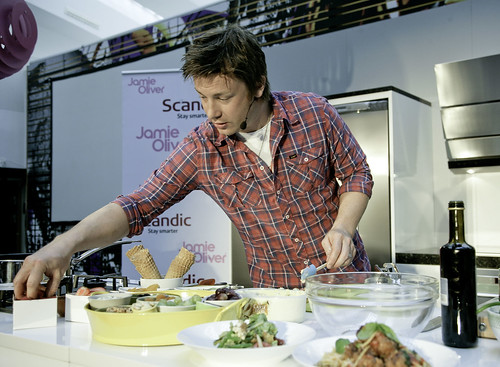
The issue of parental involvement in the programme made me think about Jamie Oliver's crusade to improve the health of the UK's school dinners. It seems crazy that anyone could pick flaws in the approach of someone who wants to make our nation's children healthier, but as we know when he declared war on the Turkey Twizzler a firestorm ensued. The mothers passing burgers and chips through the school gates argued that no one apart from them had the right to say what their children should eat - even, strangely, if this was to make them healthier and live longer.

So where do we stand with regard to our MEND programme? Is this just unwarranted interference? Should THT just stick to property concerns and leave everything else to other agencies and parents? Like most social policy at the moment, the answers aren't straightforward. One thing is clear: services such as public health will recede as government funding runs out and that leaves a gap. In lots of instances, I'm really not keen about the shortfall being made up by organisations like THT. For example, there have been rumblings about social landlords taking on broader community safety roles doing more on anti-social behaviour, but I'm not desperate for us to wear police uniforms, like some housing project staff in the USA. Nor would I want to bring rubbish removal, roads or reservoirs under our purlieu.

However, there are some gaps where we can play an important supporting role, and there are other situations where our role may expand as others' money runs out. How do we decide what to do and what not to do? Every time the answer has to be to look at our mission: we want to create strong neighbourhoods. Everything we do is driving towards achieving that. It's a curious but logical extension of our work to organise and improve housing that we also look to help other partners deliver on their agenda of better health. If that helps to strengthen our communities, then we're one step closer to our goal.

Friday, 15 July 2011

A First Reaction To Open Public Services

So, the white paper about the new era for public service delivery has finally been published. It slipped out in a week when other news dominated the agenda. Public service reform doesn't match the implosion of the News of the World in terms of headline grabbing, and while the News of the World implications may yet be far-reaching, arguably the white paper could be even more so. So when it comes to public service reform was this a good week to bury bad news, or just the opposite?
It's about reform, apparently.

First off - will this usher in the prospect of a customer-driven approach, as discussed in last week's blog? Well, from what can be divined from the white paper itself I'd say it's a cautious yes. Starting with the foreword Messrs Cameron and Clegg exhort:

"So reform of public services is a key progressive cause. The better our public services, the more we are helping those most in need. That is why those who resist reform, put the producer interest before the citizens’ needs, and object to publishing information about how services perform are conspiring to keep our society less free, less fair and less united."

Not much room for doubt there that citizen interests are ranked above those of the producer-led bureaucrats and professionals. But is the paper as assertive about citizen power trumping political power too? About letting localism develop in ways that may be uncomfortable for our local, or national holders of political power? Well, my read of the text says, probably not - at least not
yet. But this white paper is now at the consultation phase and maybe this will change as policy ideas turn into practical implementation.

Importantly, in this brave new consumer-led future, who is the preferred supplier of public services? Is all of this as the TUC claims, a charter for the break-up and privatisation of services, or should we accept the claims of the document authors who say that, "...we do not have an ideological presumption that only one sector should run services: high-quality services can be provided by the public sector, the voluntary and community sector, or the private sector." I'll leave it for you to decide what you believe.

Running a Housing Association, I never feel I know for sure which of these sectors - public, voluntary or private - I am actually in. What I do know is that any surpluses we make must be re-invested in more services and that the value of all the assets we hold is "locked" legally into our organisation, or one with similar aims and controls. And that's what worries me about pure private sector activity in public services. The private sector already provides many such services, and in some cases makes and distributes a handsome profit from that work. Further opening up of public services without a cap on the maximum level of profit that can be made and distributed from that activity seems to invite cherry-picking at best, and poor quality service delivery at worse.

As an example from another sector, take the drop in West Coast Main Line's on-board train service as Virgin's contract comes up for renewal and they try and squeeze every last drop of profit from it, in case they don't win the next franchise. An equivalent situation in housing would be difficult to imagine, and that's why a cap on profits seems to be such an obvious step to protect tenants. Logically, with that profit cap, must come an asset lock, so that not just the revenue from the assets, but the value of the underlying asset itself, is preserved for public - and not private - benefit.

Plenty of private sector organisations I know would readily accept this as a good deal. It's certainly what our response to this consultation will be arguing. What do you think?